
Cooked chicken ingredients and nutrition
How the recipes differ and which label values to use.
EASY MEAT / Guides
Choose the amount of meat for each meal, add up the portions and select your packs. Count sides separately. See how it works for three lunches.
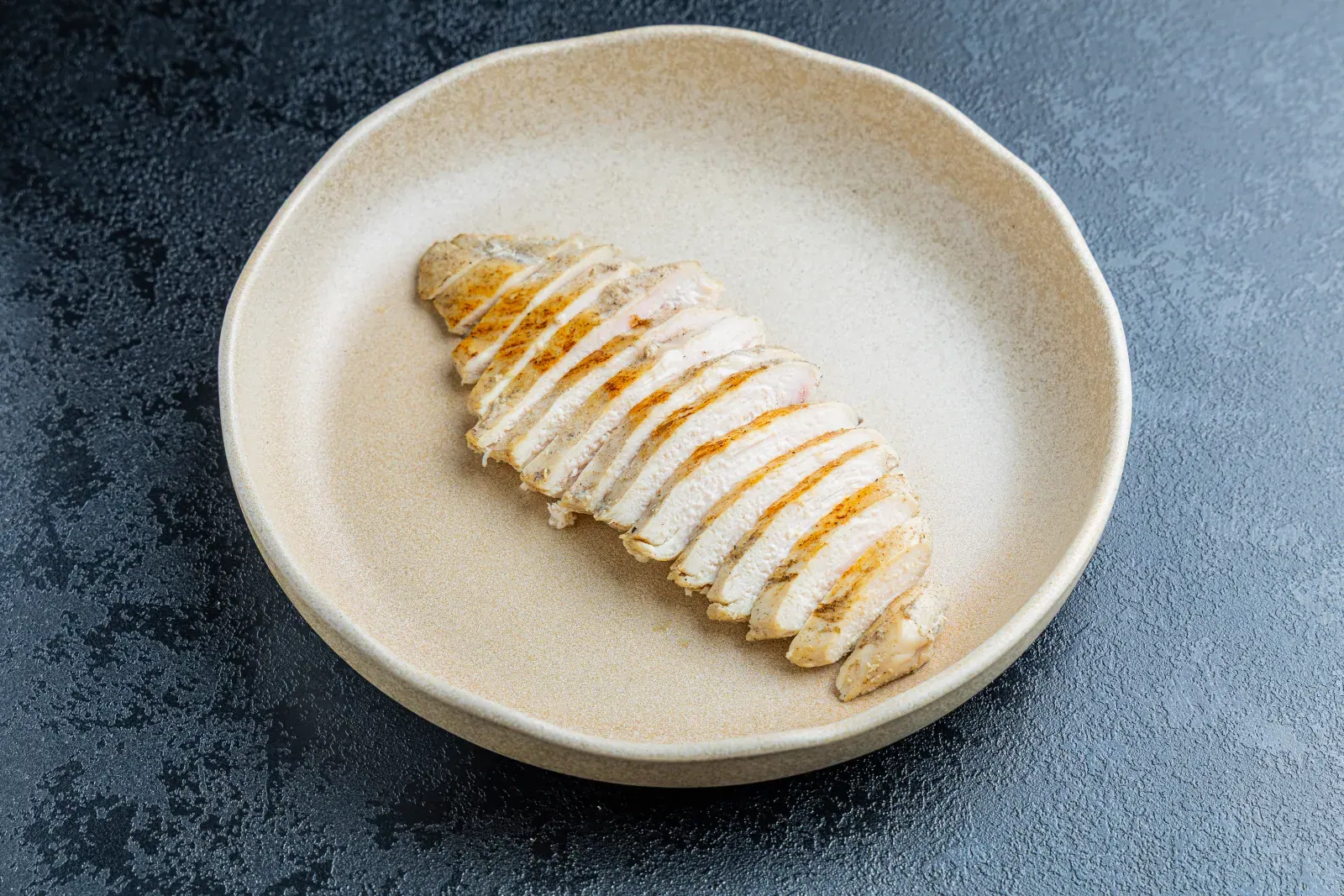
List your meals and the amount of cooked chicken for each. For example, three portions you choose at 200 g each require 600 g of cooked meat. Choose each portion’s weight for your own eating plan. You can choose different quantities for a salad, a bowl and a hot plate, then add their weights together.
For standard fillet, compare the total with the sizes on the product card. It also shows the price and fillet count. For Just Chicken, send the required weight and preferred packing directly. When choosing one large pack or several smaller ones, consider how much you will use at once and the instructions after opening.
For each value, calculate: value per 100 g × portion weight ÷ 100. A 200 g portion contains twice each declared per-100-g value. A raw chicken entry in an app does not replace the cooked fillet’s label. Standard seasoned chicken and the separate plain recipe have different ingredients; their nutrition figures are not interchangeable.
Weigh the chicken, cooked grains, vegetables and dressing separately. Chicken with rice and broccoli has three components; oil and sauce add their own values. The fillet label covers the meat product only. Serve sauce separately when people want different amounts.
Cut fillet for a salad, slice it thinly for sandwiches or portion it beside a side dish. It is already cooked. Cold serving needs no further frying; for warm serving, follow the label. Plan opened packs around the dates and instructions for that batch. Agree extra deliveries before ordering if you need them.
How the recipes differ and which label values to use.
Turn cooked fillet into several meals with sides, assembly and storage tips.
What to include when ordering chicken without added salt, oil or spices.